Strategic Burial Resistance
Strategic burial is the only incentive in head-to-head election systems where voters can potentially improve their outcome by voting insincerely when the electorate is not in a preference cycle. We have shown in a previous section that all other incentives to vote insincerely in hopes of improving outcomes require the sincere electorate to be in a preference cycle, and such cycles are extremely rare in ideological elections. Critics of head-to-head election systems frequently argue that because of strategic burial, voters will feel incentivized to vote insincerely to bury other candidates. Advocates argue that successful strategic burial would be very difficult to coordinate in large elections and would carry so much risk, it would never be worth the attempt for voters or campaigns to even try.

Strategic burial can occur when voters intentionally rank a candidate who would otherwise be the undefeated head-to-head winner below candidates they actually prefer less, in an attempt to bury them, prevent them from becoming undefeated, and force the election into a preference cycle. If the resulting cycle-resolution method selects their favored candidate, the burial strategy succeeds. In this article, we use the term "Strategic Burial Resistance" to refer to the use of a cycle-resolution method designed to combat this burial strategy. We also demonstrate how this would work.
All of the previous examples on this site have been fictional elections. But for this article, we are going to use the 2022 Alaska House special election. If you are not familiar with that election, please review it here.
Alaska 2022
There were three main candidates in this election, Republican Nick Begich, Republican Sarah Palin, and Democrat Mary Peltola:



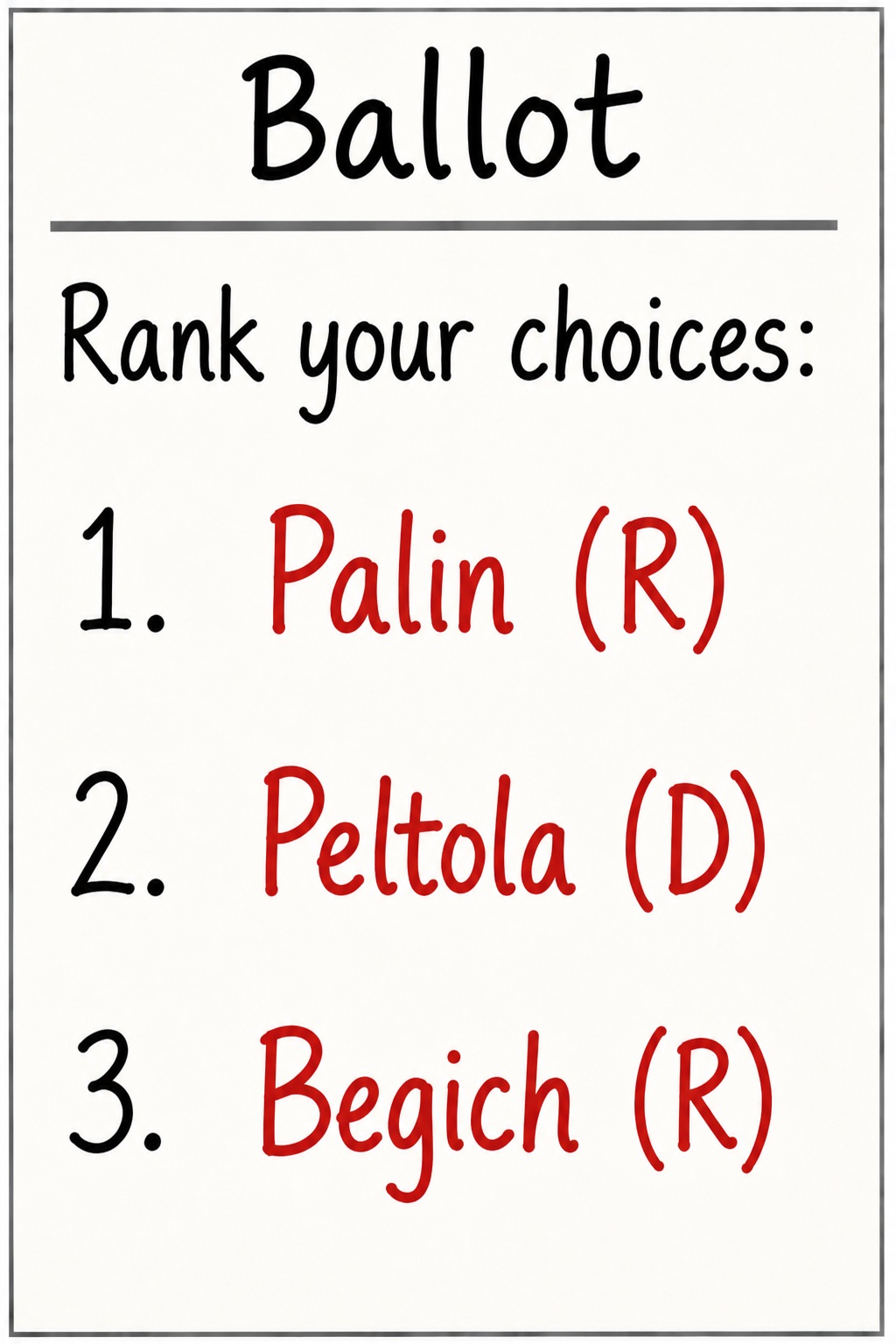
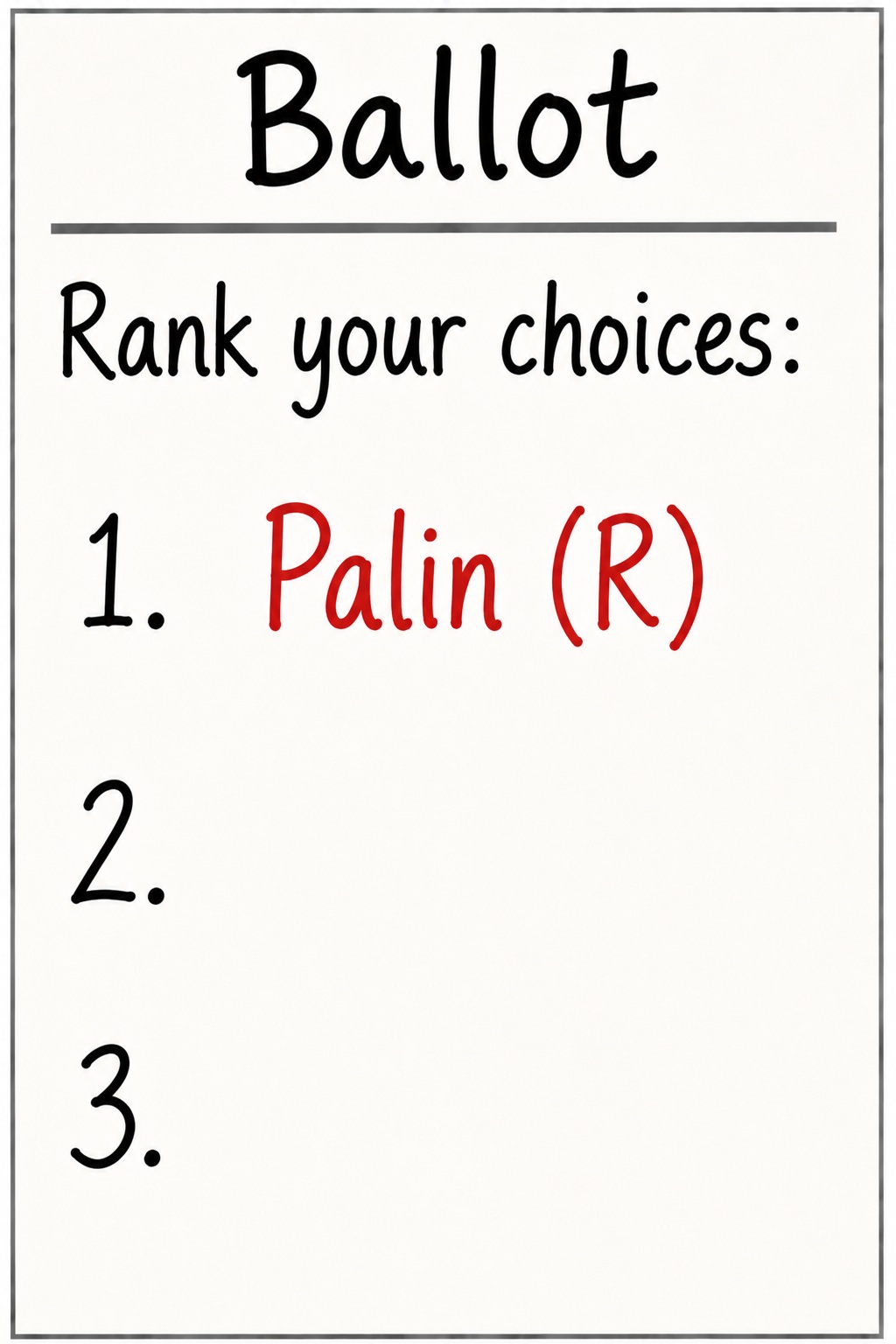
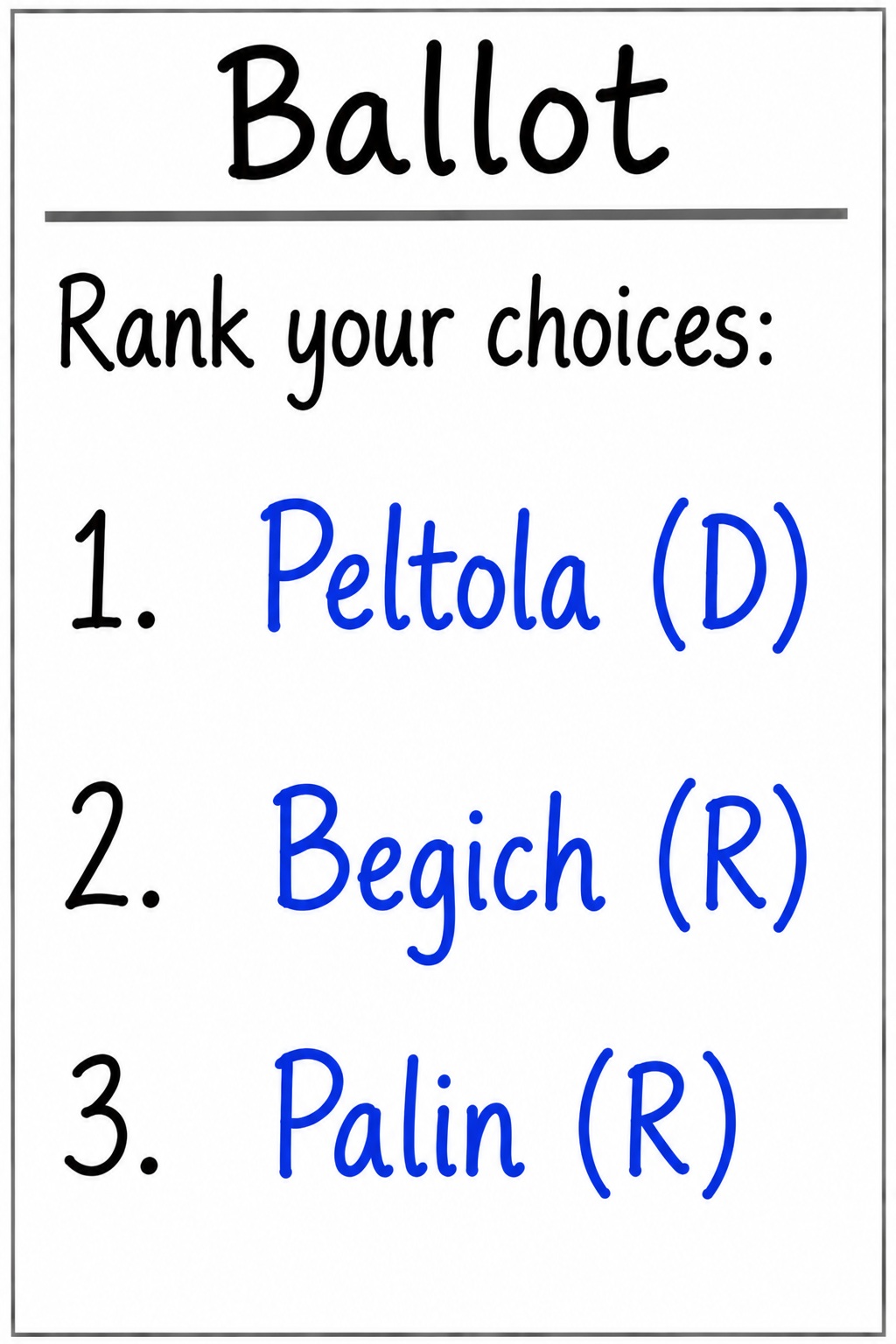
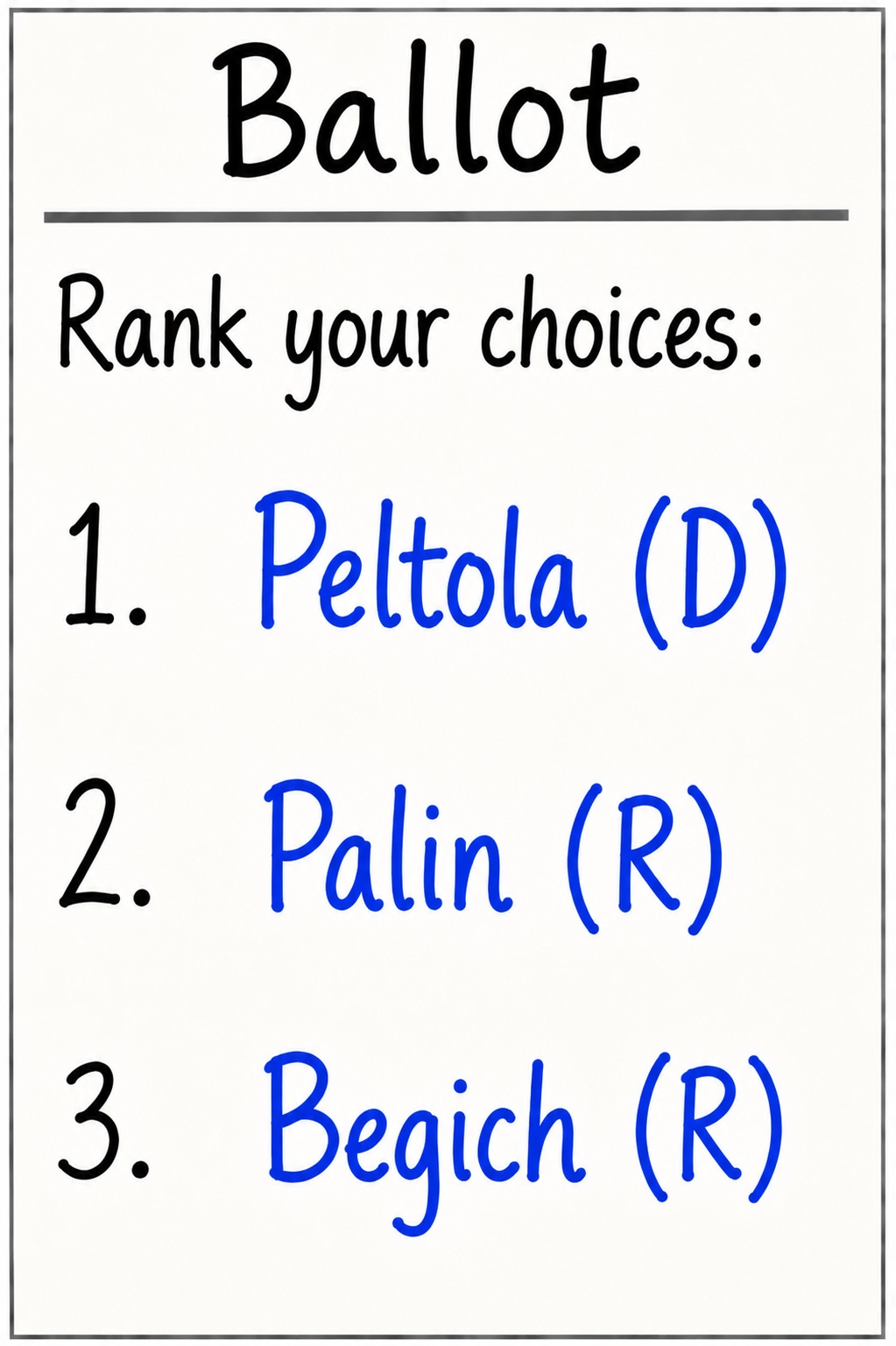
There were 188,582 valid ballots that expressed a preference for at least one of these three candidates. Those ballots broke down as follows1 among the three candidates:
Voters
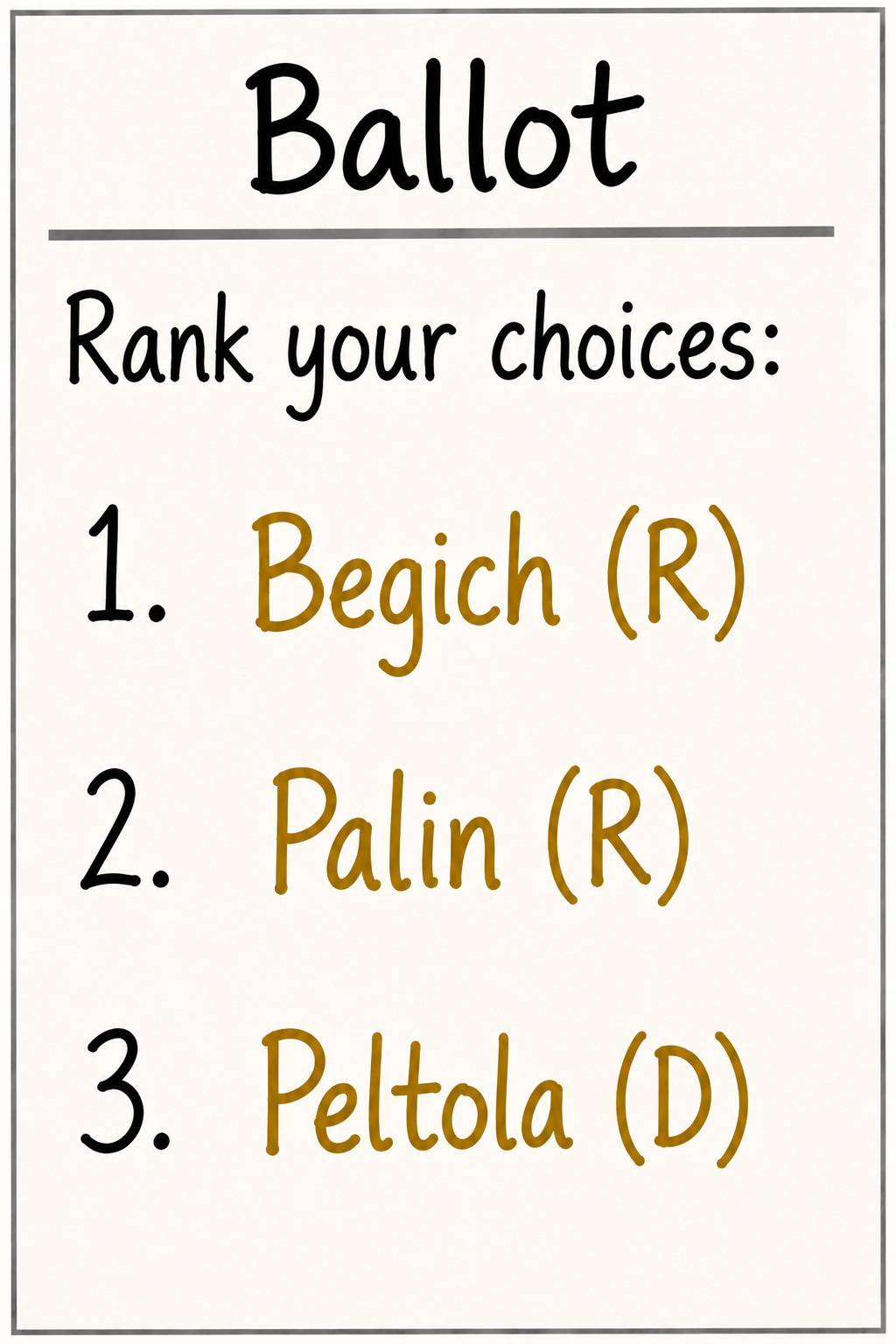
Voters
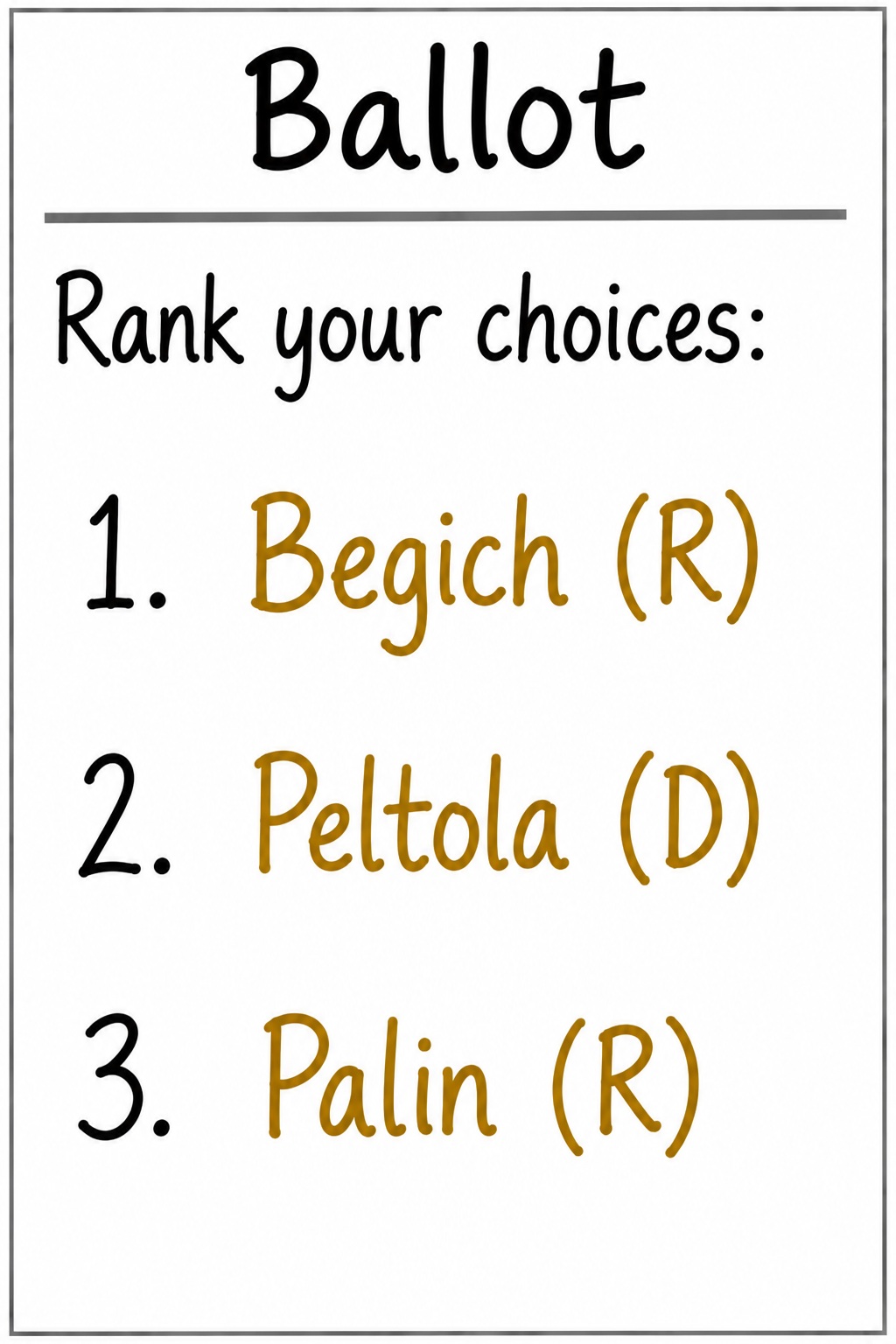
Voters
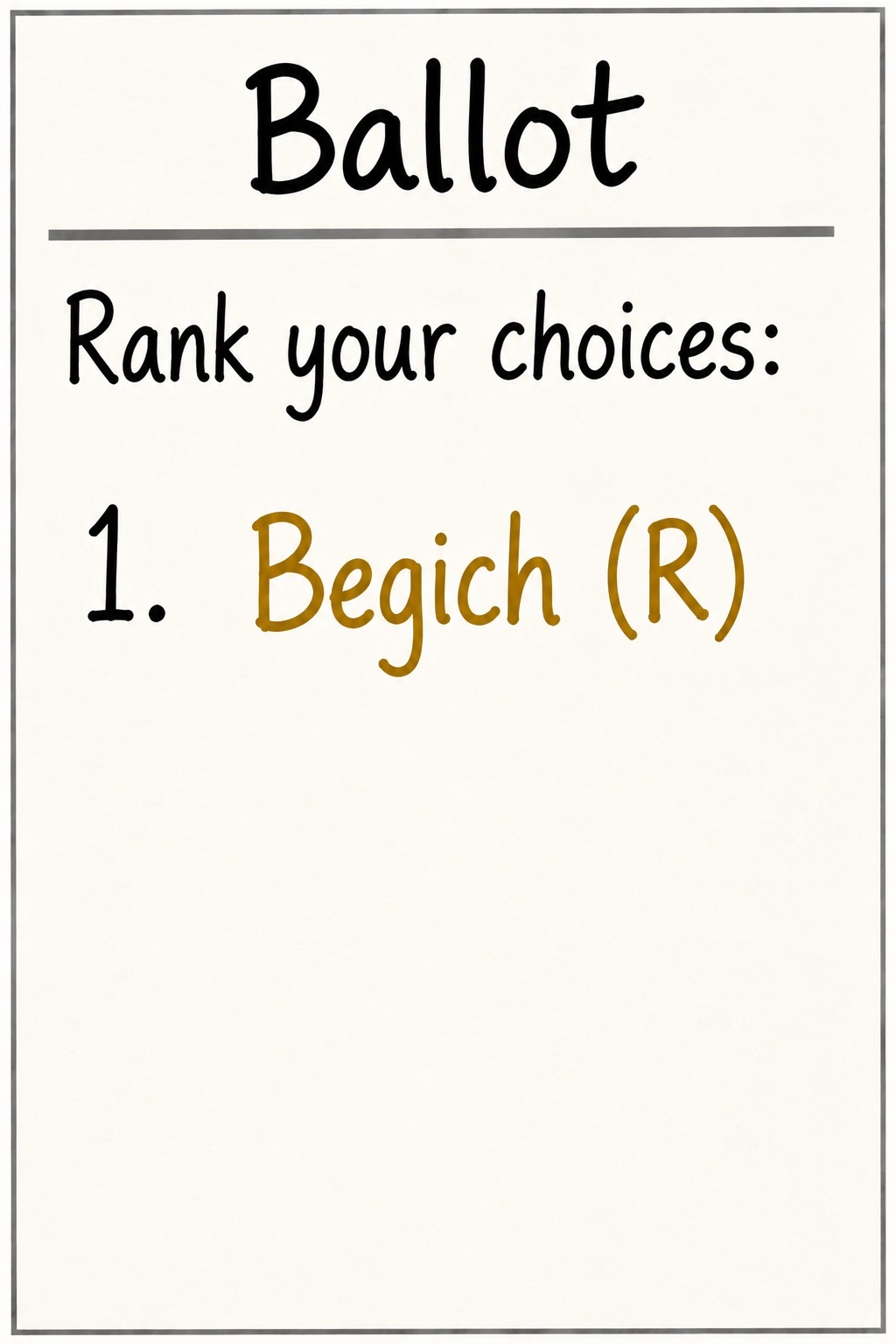
Voters
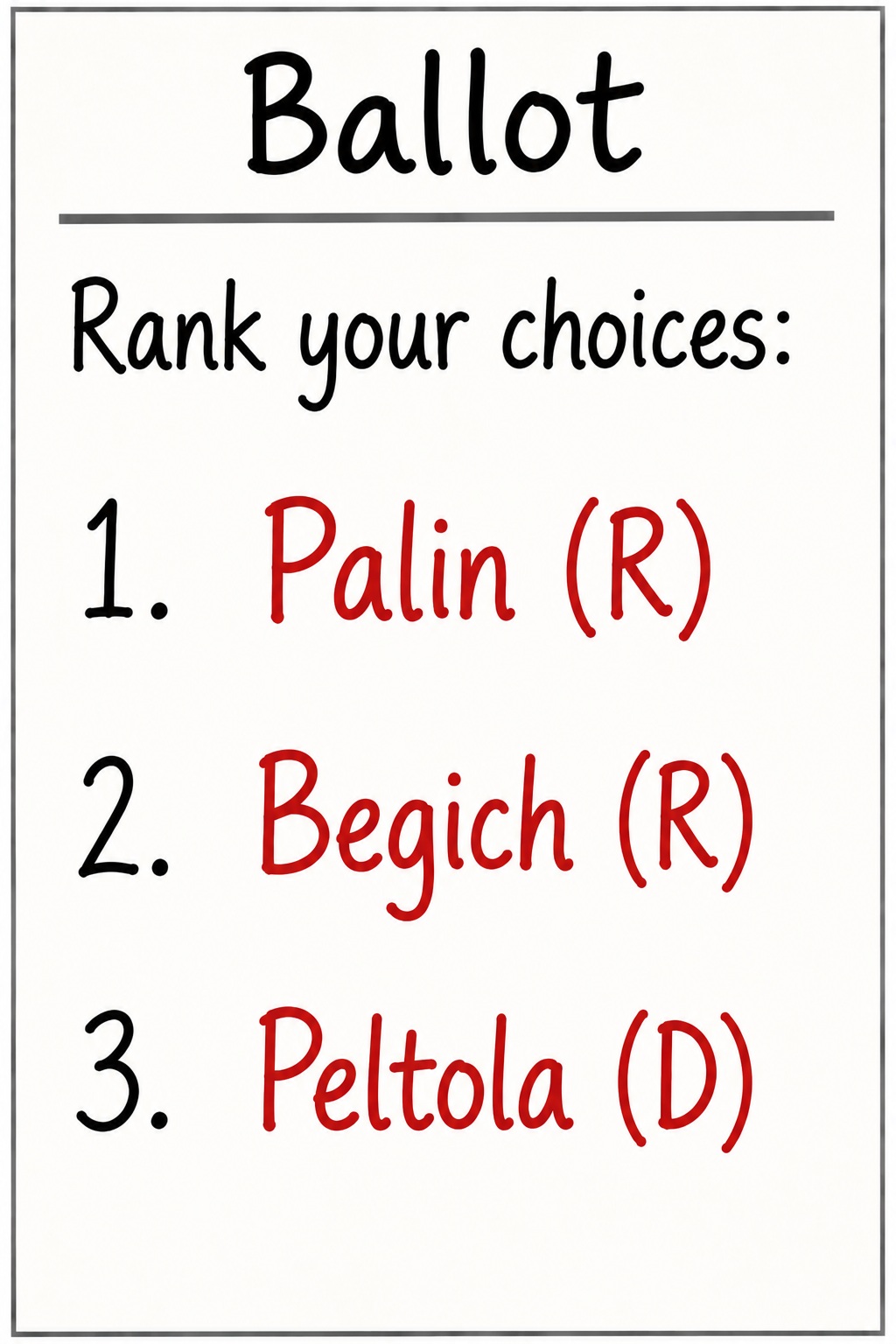
Voters
Voters
Voters
Voters
Voters
If head-to-head record had been used, Begich would have been the undefeated head-to-head winner:

Strategic Burial in Alaska 2022
Critics of head-to-head elections argue that if the 2022 Alaska election had used a head-to-head election system, the Peltola campaign might have feared Begich as a potential head-to-head champion and urged supporters to "bury" Begich by insincerely ranking Palin second and Begich last. It would take at least 18,802 Peltola supporters to insincerely bury Begich to force a preference cycle. Suppose the Peltola campaign could get 20,000 supporters to change their ballots as follows:
This change affects only the Begich-versus-Palin head-to-head matchup. In the actual election, Begich defeated Palin 101,225-63,623:

But if 20,000 voters chose to insincerely bury Begich, Palin would win that head-to-head matchup 83,623-81,225. This would cause Begich to lose his head-to-head matchup with Palin and force the election into a preference cycle of Begich > Peltola > Palin > Begich. Once a cycle exists, the winner depends entirely on the cycle-resolution method. If first-choice preferences were used as the tiebreaker:
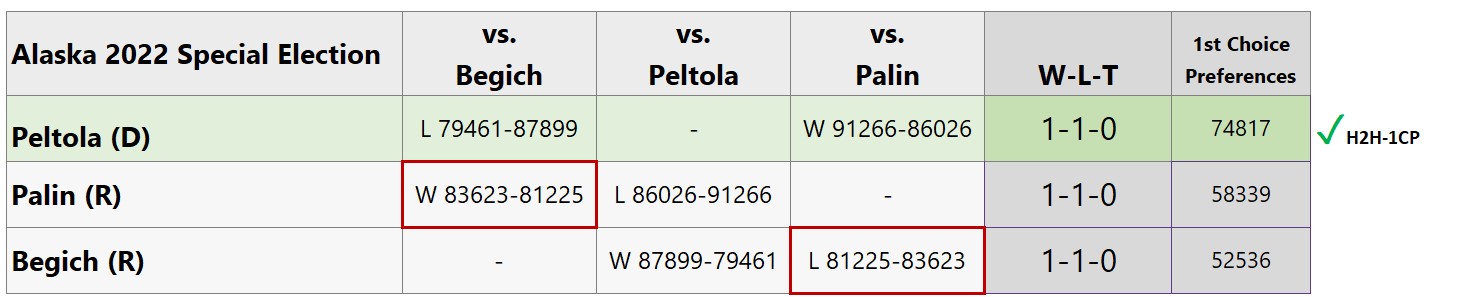
Peltola would have won using first-choice preferences as the cycle-resolution method, and the burial strategy would have succeeded. So we will now consider what would happen if worst loss differential was used as the tiebreaker:
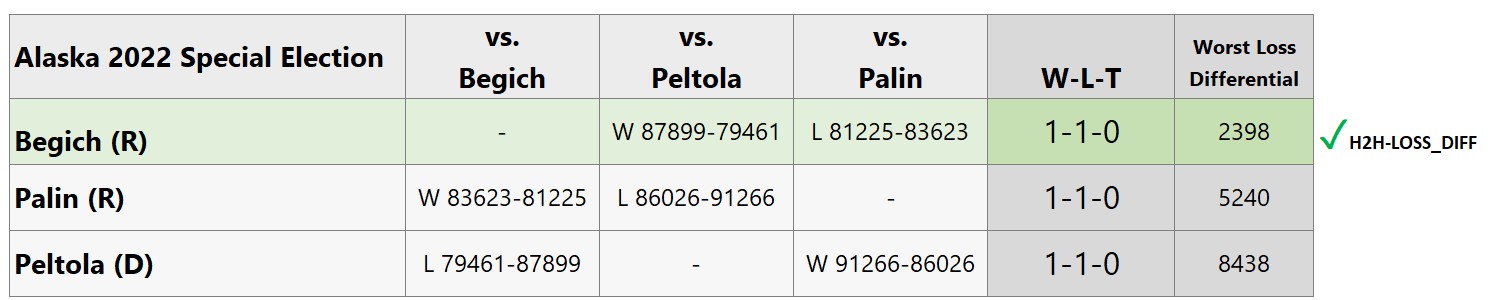
In this case, Begich would still win, and the strategic burial attempt would have failed. While this cycle-resolution method does not make head-to-head elections completely resistant to burial, it does make the burial strategy substantially more difficult.
Burial Backfire
We now consider the case where 21,422 or more Peltola supporters insincerely bury Begich, enough for Begich to no longer have the lowest worst loss differential. If 22,000 Peltola supporters tried to bury Begich, Palin would defeat Begich head-to-head 85,623-79,225, giving Begich a worst loss differential of 6,398. The results would become:
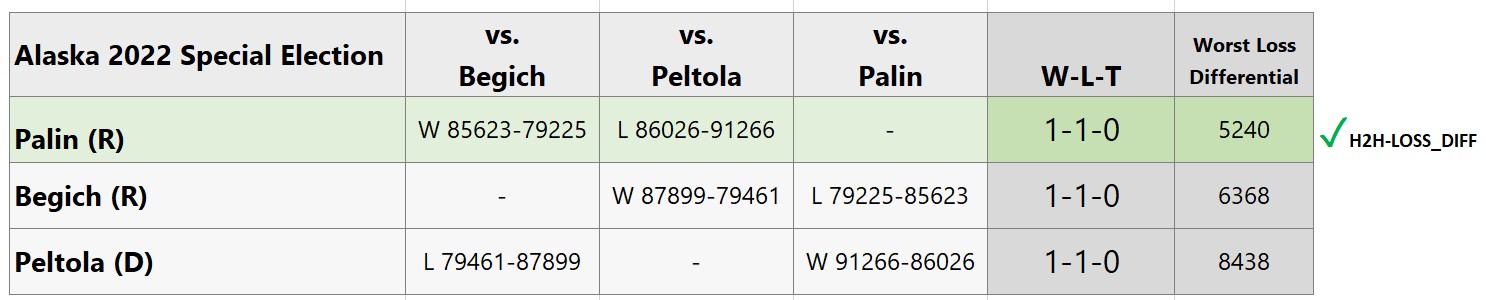
Palin would win, and the burial attempt would backfire. Under Worst Loss Differential, Peltola supporters could influence whether Begich or Palin was elected, but they could not elect Peltola by burying Begich. If they pushed the strategy too far, they would instead elect their least-preferred candidate.
Retaliation Backfire
Even in a case where Peltola had a lower worst loss differential than Palin, many head-to-head election system advocates don't believe the strategy would have worked anyway. They argue that in a statewide election, if the Peltola campaign urged their supporters to insincerely rank Begich below Palin, Begich supporters would hear about this and almost certainly respond by insincerely ranking Peltola below Palin. In the example above, where 20,000 Peltola voters buried Begich, suppose just 5,000 Begich supporters responded by burying Peltola:
This would cause Palin to defeat Peltola and make Palin the undefeated winner:

This would be the worst result for both groups of voters attempting burial. We discussed in a previous article how two factions trying to bury each other can resemble the Hawk-Dove game, giving both sides an incentive to avoid strategic escalation.
No election system completely eliminates strategic incentives. The more useful question is how difficult successful strategic voting actually becomes. If manipulating the outcome requires coordinating a large number of voters, accurately predicting how other voters will rank the candidates, understanding how the cycle would be resolved, and risking a strategic backfire, then the practical incentive to attempt burial may be much smaller than critics suggest.
1The official election included four named candidates (Mary Peltola, Sarah Palin, Nick Begich III, and Chris Bye) plus write-in candidates. This article considers only the order of preference of the three principal candidates. Chris Bye and the write-in candidates were removed for simplification because the total number of ballots including them was less than the first-choice support received by any of the three principal candidates, meaning they could not defeat any of those candidates in a head-to-head contest.
Comments
This site does not manage comment accounts. Comment data is handled by a third-party discussion service.